
A well-applied heat transfer vinyl print can easily outlast the garment it is on. Yet "my print is peeling" is still the most common complaint in the custom apparel business. In almost every case, the cause is not the vinyl itself but the application or the care. In this article we explain what happens inside a transfer during washing – and what you can do to guarantee long-lasting results.
How HTV bonds – and how it fails
During pressing, the adhesive melts and flows around the individual fibres of the fabric. When it cools, it forms a mechanical and chemical anchor. A transfer fails when this anchor is too weak, or when it is repeatedly stressed beyond its limit. Four forces attack the bond during a garment's life:
- Water and detergent – surfactants attack the adhesive interface, especially at the edges.
- Heat – very hot washing or drying softens the adhesive again.
- Mechanical stress – stretching, rubbing and tumbling flex the film.
- Chemicals – bleach, softeners and dry-cleaning solvents degrade films and adhesives.
The five most common causes of peeling
1. Too little heat, time or pressure
If the adhesive did not fully melt and penetrate the fabric, the print may look fine initially but lifts after one or two washes. The fix: verify the real platen temperature with a thermometer, check pressure evenness and add 3–5 seconds of dwell time.
2. Wrong peel timing
Peeling a cold-peel film while it is still hot lifts the adhesive before it has set. Always follow the peel type on the product sheet.
3. Washing too early
The adhesive continues to cure for up to 24 hours. Washing a garment on the same day is a common cause of early failure.
4. Fabric finishes
Water-repellent, stain-resistant and silicone softener finishes reduce adhesion. Pre-pressing helps with moisture, but finishes may need to be washed out before decoration – test first.
5. Fabric softener
Liquid fabric softeners leave a waxy layer that migrates under the edges of the vinyl and gradually lifts them. This is the number-one care mistake made by end customers.
Cracking and fading
Cracking occurs when a film with limited elasticity is stretched repeatedly, or when it is over-pressed and becomes brittle. Use stretch-friendly PU films on elastic fabrics and avoid excessive temperatures. Fading of the film colour is rare with quality HTV; if colours seem dull, the cause is usually dye migration from the fabric or residue from detergents.
The care rules – and why they work
| Rule | Why it matters |
|---|---|
| Wait 24 hours before the first wash | Allows the adhesive to cure completely. |
| Turn inside-out | Reduces abrasion against the drum and other garments. |
| Wash warm or cold (max. 40 °C) | Keeps the adhesive below its softening point. |
| Mild detergent, no bleach | Protects film colour and adhesive chemistry. |
| No liquid fabric softener | Prevents edge lifting. |
| Tumble dry low or line dry | High dryer heat re-softens the adhesive. |
| Do not dry clean | Solvents attack PVC and PU films. |
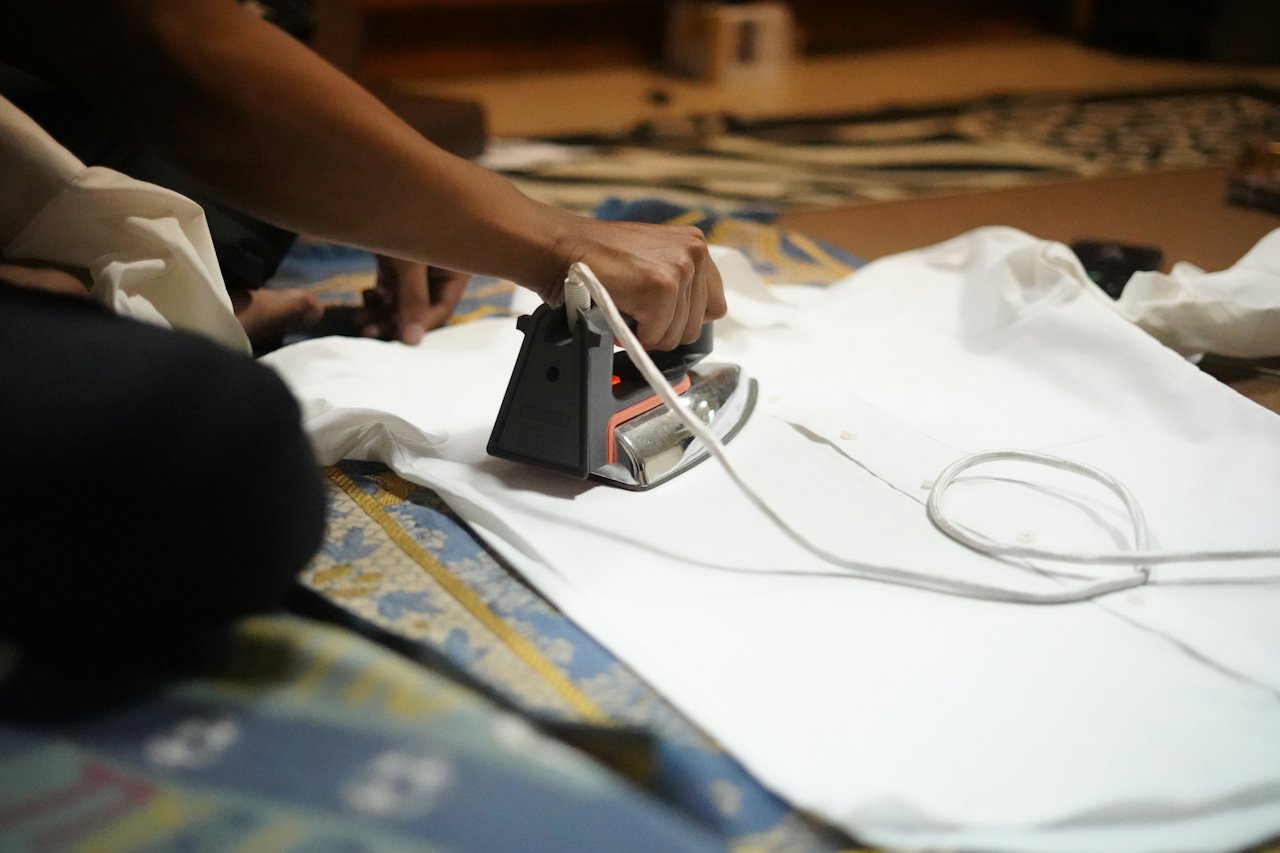
| Do not iron directly on the design | Direct heat melts or glosses the film; iron inside-out if needed. |
How many washes can HTV survive?
Industrial-grade films such as VENYL NS, ST and PU series withstand 50 or more home washes at 40 °C when correctly applied and cared for. Effect films like glitter, holographic and metallic are also durable, but their decorative surface can show wear earlier on high-abrasion areas. In our lab, we test samples according to ISO 6330-based procedures and evaluate edges, adhesion and colour after 10, 25 and 50 cycles.
What if a transfer starts to lift?
If only an edge lifts and the film is still intact, cover the area with a PTFE sheet and re-press for 10–15 seconds at the original temperature. If the adhesive has been contaminated with softener, a re-press may not work – in that case wash the garment without softener first, let it dry fully, and try again.
Include a care card
Most complaints come from customers who simply do not know how to treat decorated garments. A printed care card or a hang-tag with the rules above protects your reputation. Many decorators also add the care symbols directly to their packaging or invoices.
Special cases: sportswear, workwear and children's clothes
Sportswear
Technical fabrics are often washed after every use. Choose stretchable PU films for elastic garments and advise washing at 30–40 °C. Softeners reduce both vinyl adhesion and the moisture-wicking function of the fabric, so skipping them benefits the garment as well.
Workwear
Industrial laundries may wash at 60 °C or higher with strong detergents. Standard HTV is not designed for industrial laundry. For uniforms that go to commercial laundries, discuss requirements with us – we recommend testing the specific process and, where needed, using films and adhesives developed for higher wash temperatures.
Children's clothing
Kids' garments are washed often and stretched a lot. Use soft, thin films, avoid small glued-on parts that could peel, and place designs away from seams. Always follow the safety regulations for children's products in your market.
Storage of decorated garments
Freshly decorated garments should be stored flat or on hangers, not tightly folded with the design folded onto itself, for the first 24 hours. In hot warehouses or shipping containers, transfers pressed against each other can stick – place a sheet of silicone paper between folded garments when shipping in summer.
How we test durability at VENYL
- Standard test garments (100% cotton, 100% polyester and 65/35 blend) are decorated with fixed settings.
- Samples rest 24 hours at room temperature.
- They are washed in domestic washing machines at 40 °C (and 60 °C for selected series) with reference detergent.
- After 10, 25 and 50 cycles we assess edge lifting, cracking, colour change and adhesion using grey-scale and peel tests.
- Results are archived with the batch number, so every roll can be traced back to its test data.
This data allows our technical support team to quickly identify whether a complaint is related to the material, the application or the care.
Durability is a shared responsibility: the manufacturer provides a reliable film, the decorator applies it correctly, and the customer cares for it properly.
Printable checklist for decorators
- Film chosen for fabric type and stretch
- Platen temperature verified
- Even pressure, correct dwell time
- Correct peel type
- Post-press done
- Care card included in the package
Having durability problems you cannot explain? Our technical support team can analyse pressed samples in our lab and send you a written report.